Payment Integration in Saudi Arabia: Systems, APIs & Reconciliation
Payment Integration in Saudi Arabia: Systems, APIs & Reconciliation refers to the unified architectural framework connecting multi-channel payment capture endpoints
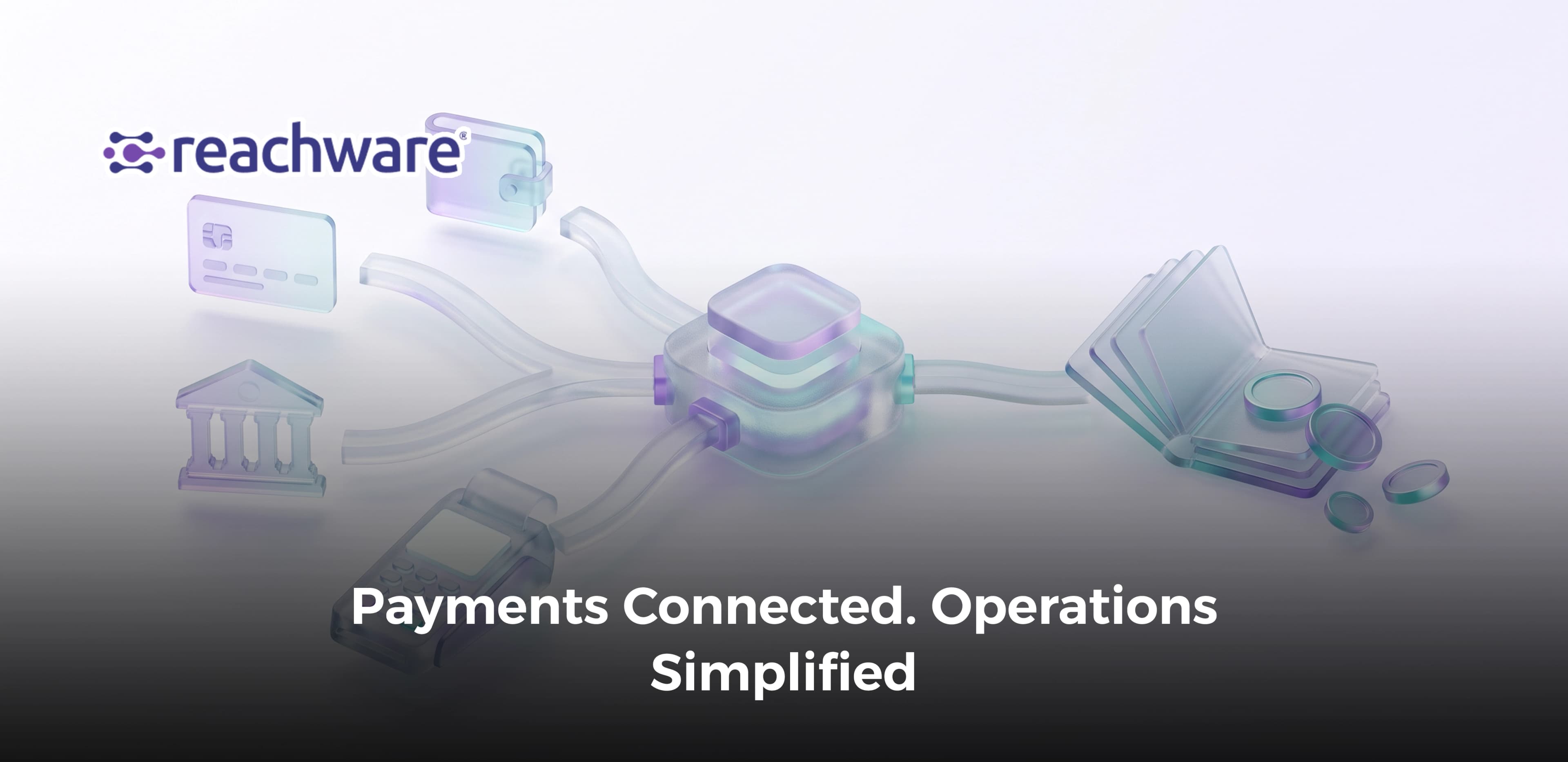
Payment Integration in Saudi Arabia: Systems, APIs & Reconciliation refers to the unified architectural framework connecting multi-channel payment capture endpoints—including physical point-of-sale (POS) terminals operating over the national mada debit scheme, digital e-commerce checkouts (Apple Pay, credit cards, Tamara, Tabby, STC Pay), and diverse Payment Service Providers (PSPs)—directly into enterprise ERP accounting ledgers (such as SAP, Oracle NetSuite, and Microsoft Dynamics 365). Rather than acting as a licensed acquiring bank or payment gateway, an integration middleware like Reach Pay provides normalized API abstraction, automated multi-way settlement reconciliation, real-time token synchronization, and strict compliance with Saudi Central Bank (SAMA) and PCI-DSS standards, eliminating manual spreadsheet matching and disjointed omnichannel refunds.
Executive summary: define the problem and answer the query
The modern financial ecosystem in the Kingdom of Saudi Arabia, catalyzed by the Financial Sector Development Program under Vision 2030, has established one of the world's most advanced digital payment landscapes. However, for Chief Financial Officers (CFOs), finance operations leads, and enterprise systems architects, managing payment integration in Saudi Arabia across expanding sales channels has generated severe operational fragmentation.
Modern Saudi enterprises rarely operate through a single payment channel. Instead, they manage a heterogeneous mix:
- Physical Retail POS Terminals: In-store checkout hardware contracted through domestic acquiring banks (such as Al Rajhi, SNB, Riyad Bank, or Banque Saudi Fransi) processing transactions via the national mada debit network and international card schemes.
- Digital Storefront Gateways: Online checkouts integrated with regional and global Payment Service Providers (PSPs) like Checkout.com, PayTabs, Moyasar, HyperPay, and Amazon Payment Services, supporting Apple Pay and Buy Now Pay Later (BNPL) platforms (Tamara and Tabby).
- Enterprise Resource Planning (ERP) Systems: Core general ledgers (SAP S/4HANA, Oracle NetSuite, Microsoft Dynamics 365, Odoo) responsible for revenue recognition, Accounts Receivable, and bank reconciliations.
The Fundamental Integration Problem
Without an architectural integration layer, enterprises connect each payment endpoint directly to their ERP using brittle, point-to-point scripts. This approach leads to three critical operational failures:
- The Reconciliation Void: Finance teams spend days manually cross-referencing bank deposit statements, PSP portal CSV exports, and ERP sales orders to isolate uncaptured transactions and interchange fee discrepancies.
- Omnichannel Friction: In-store returns of digital orders (Buy Online, Return In-Store or BORIS) fail programmatically because POS hardware cannot reference digital payment tokens created online.
- Security & Technical Debt: Direct integrations expand the merchant's PCI-DSS audit scope, creating vulnerabilities and requiring continuous code refactoring whenever acquiring banks update their API specifications.
This Topic guide: payment integration in Saudi Arabia examines the architecture, APIs, workflows, and reconciliation controls required to unify payments. Discover how deploying a specialized payment integration platform delivers operational simplicity, and review related architectures in Smart Online & Offline Payment Solution in Saudi Arabia and B2B Payment Integration in Saudi Arabia: Architecture and Controls.
Integration architecture across payment providers
Enterprise payment integration requires a modular, event-driven architecture that decouples payment capture mechanisms from back-office financial ledgers while complying with Saudi Central Bank (SAMA) regulations and PCI-DSS Level 1 standards.
codeCode
┌────────────────────────────────────────────────────────────────────────┐
│ ENTERPRISE TRANSACTION CHANNELS │
│ Physical POS Terminals (mada) │ Online Checkouts (Web/Mobile App)│
└───────────────────────────────────┬────────────────────────────────────┘
│
▼
┌────────────────────────────────────────────────────────────────────────┐
│ REACH PAY: UNIFIED PAYMENT INTEGRATION MIDDLEWARE │
├────────────────────────────────────────────────────────────────────────┤
│ • Canonical API Gateway • Omnichannel Token Vault │
│ • Smart Provider Routing • Idempotency & Replay Defense │
│ • Automated 4-Way Reconciliation • Fee & MDR Contract Auditor │
└───────────────────┬────────────────────────────────┬───────────────────┘
│ │
▼ ▼
┌─────────────────────────────────────┐ ┌───────────────────────────────┐
│ ACQUIRING BANKS & PSPS │ │ ERP & FINANCIAL CORE │
│ Al Rajhi, SNB, Checkout, Tamara │ │ SAP, NetSuite, Dynamics 365 │
└─────────────────────────────────────┘ └───────────────────────────────┘
Architectural Principles of Unified Payment Integration
- Canonical Schema Normalization: Rather than forcing your ERP to parse disparate webhook schemas from five different PSPs and bank POS protocols, the integration middleware translates all incoming transaction events into a single standardized data object.
- Stateless Edge Execution & Token Vaulting: Cardholder data is tokenized at the provider edge. The integration layer manages token mappings, ensuring the merchant's core servers never touch unencrypted Primary Account Numbers (PAN), maintaining the lowest possible PCI-DSS compliance scope (SAQ-A).
- Asynchronous Decoupled Ingestion: High-velocity retail transactions (such as flash sales or peak in-store hours) are captured in microsecond-level message queues, isolating front-end cashier registers from back-end ERP processing pauses.
Critical Architectural Clarification: Reach Pay is an enterprise integration middleware, not an acquiring bank, payment processor, or payment gateway. Merchants maintain their existing commercial acquiring contracts and negotiated Merchant Discount Rates (MDR) with their licensed financial institutions, while Reach Pay provides the underlying data orchestration and automated financial reconciliation.
Payment routing, tracking and reconciliation
Managing payment flows across multiple providers requires intelligent routing, end-to-end transaction lineage, and automated multi-way ledger reconciliation.
Dynamic Payment Routing & Failover
Relying on a single payment provider exposes an enterprise to regional outages and degraded authorization rates. An integration middleware introduces dynamic routing logic:
- Rail Optimization: Automatically routes domestic debit cards through the national mada scheme to minimize interchange costs and maximize authorization speed.
- Health-Check Failover: Continuously monitors latency and HTTP status codes across connected PSPs. If a primary gateway experiences a degradation spike (>2,000ms latency or elevated 5xx error rates), subsequent transactions are automatically routed to a secondary standby provider with zero customer friction.
The 4-Way Multi-Provider Reconciliation Engine
Payment reconciliation in multi-channel commerce requires cross-verifying four independent data streams:
codeCode
[1. Order Record] <─── automated match ───> [2. PSP Authorization]
(Cart / POS Register) (Gateway Capture API)
│ │
reconciliation reconciliation
│ │
▼ ▼
[4. ERP General Ledger] <─── automated match ───> [3. Bank Settlement]
(GL Journal Posting) (MT940 / CAMT Statement)
- The Order Record: The original sales order generated by the digital cart (Shopify, Salla, Magento) or retail POS register.
- The PSP Authorization: The transaction capture record returned by the payment gateway containing authorization codes and Retrieval Reference Numbers (RRN).
- The Bank Settlement Statement: The actual corporate bank deposit statement (MT940, CAMT.053, or open banking API feeds) reflecting net funds transferred, settlement dates, and bank fees.
- The General Ledger Entry: The accounting posting inside the ERP, verifying that accounts receivable and cash-in-transit accounts balance to zero.
Automating this 4-way matching process eliminates manual spreadsheets, flags contractual MDR overcharges, and isolates chargebacks in real time.
Security, audit and vendor evaluation checklist
Enterprise payment solutions must satisfy stringent regulatory, security, and governance standards before production deployment in Saudi Arabia.
Technical & Regulatory Evaluation Checklist
Category | Requirement Specification | Verification Criteria |
SAMA Compliance | Alignment with Saudi Central Bank Payment Framework | Verified data residency inside KSA; compliance with SAMA cybersecurity controls. |
PCI-DSS Scope | Minimization of Cardholder Data Environment (CDE) | Native tokenization support; merchant environment maintained under SAQ-A / SAQ-A-EP scope. |
Data Encryption | End-to-end cryptographic protection | TLS 1.3 in transit; AES-256 for all stored transaction metadata and audit logs. |
Idempotency | Protection against double-charging and duplicate orders | Unique idempotency keys enforced on every API request and webhook delivery. |
Disaster Recovery | High-availability multi-region cloud deployment | Documented Recovery Time Objective (RTO < 15 mins) and Recovery Point Objective (RPO < 1 sec). |
Audit Trails | Immutable historical activity logging | Tamper-evident logging of all state transitions, user access, and ledger reconciliations for 6+ years. |
Implementation blueprint and data flow (step by step)
Implementing a unified enterprise payment integration framework follows a structured, six-stage lifecycle:
Step 1: Capture & Pre-Validation
When a purchase is triggered (via in-store POS tap or online checkout submission), transaction metadata including currency (SAR), terminal ID, merchant category code (MCC), line extensions, and cart totals is captured and pre-validated against corporate validation rules.
Step 2: Tokenization & Intelligent Rail Routing
Cardholder credentials are encrypted directly at the client interface using hosted fields or hardware-encrypted POS pin-pads. The integration layer evaluates transaction attributes to select the optimal payment rail:
- Routing domestic debit cards over mada for instant settlement.
- Evaluating credit card transactions for the highest-performing PSP gateway based on real-time availability metrics.
Step 3: Authorization & Webhook Orchestration
The selected PSP or acquiring bank processes the authorization request through 3D Secure (3DS 2.0). The resulting authorization webhook is ingested by Reach Pay's edge listener, verifying HMAC signatures to prevent man-in-the-middle attacks.
Step 4: Normalization & State Invariance
The integration middleware transforms provider-specific JSON responses into a unified canonical object:
- Transaction UUID
- Channel Code (POS Terminal ID vs. Storefront Store ID)
- Gross Authorized Amount, Net Payout, and Deducted MDR Fee
- Retrieval Reference Number (RRN) and Bank Authorization Code
Step 5: Real-Time ERP Posting
The normalized transaction is pushed asynchronously to the ERP financial core (SAP, NetSuite, Dynamics 365, Odoo), creating a validated sales invoice, recording a customer payment receipt, and clearing inventory.
Step 6: Automated Settlement & Ledger Reconciliation
At daily cut-off times, the integration engine ingests electronic bank settlement files (MT940/CAMT), executes automated 4-way matching against open authorizations, flags fee discrepancies, and posts settlement clearing journal entries to the general ledger.
Evaluation framework: requirements, decision matrix and alternatives
Finance and IT leadership must rigorously evaluate whether to maintain custom point-to-point connections, build an in-house payment microservice, or deploy an enterprise integration platform.
Vendor-Neutral Decision Matrix
Evaluation Dimension | Direct Point-to-Point Coding | In-House Custom Gateway | Dedicated Middleware (Reach Pay) |
Omnichannel Synchronization | Siloed; online and store payments remain in separate databases. | Requires writing and maintaining custom message queues between POS and web. | Native unification of physical POS, digital carts, and ERP ledgers. |
Multi-PSP API Maintenance | High; every provider API upgrade requires code refactoring. | Ongoing engineering overhead to maintain diverse SDKs and webhooks. | Single canonical API abstracting all acquiring banks, PSPs, and BNPL rails. |
Automated Reconciliation | Manual CSV cross-referencing in spreadsheets taking days each month. | Fragile parsing scripts that break when bank statement formats shift. | Automated 4-way matching across carts, PSPs, bank feeds, and general ledger. |
Omnichannel Returns (BORIS) | In-store refunds for online orders require manual cash/card transactions. | Custom token mapping required across physical and digital payment gateways. | Automated parent-child token mapping allows instant in-store refunds to digital cards. |
PCI-DSS Compliance Scope | High PCI scope if sensitive payment payloads touch local POS/ERP servers. | Requires extensive annual PCI-DSS Level 1 auditing and penetration testing. | Tokenized integration keeps merchant servers strictly out of sensitive PCI scope. |
Deployment Timeframe | 6–12 months of custom development per system. | 9–18 months with dedicated internal engineering squad. | Pre-built certified connectors deployed in weeks. |
Failure modes, security, governance and validation
Operating high-volume payment infrastructure requires preemptive safeguards against known operational failure modes.
Troubleshooting Matrix: Common Omnichannel Payment Failures
Failure Mode | Root Cause | Operational Impact | Middleware Self-Healing Remedy |
Orphaned Authorizations | Customer card authorized, but network timeout aborted POS receipt printing. | Customer charged; cashier sees failed transaction; inventory locked. | Automated reversal (void) protocol queries PSP status and releases funds if receipt fails. |
MDR Fee Discrepancies | Acquiring bank applied incorrect interchange tier or omitted promotional rates. | Silent margin erosion across millions in annual transaction volume. | Automated fee auditing compares actual deducted fees against contractual rate cards. |
Duplicate Webhook Processing | Network jitter caused PSP to retry webhook submission multiple times. | Duplicate sales orders and double revenue recognition in the ERP. | Strict idempotency keys ensure identical transaction IDs are processed exactly once. |
Asynchronous BORIS Desync | Customer returns online order in-store; POS cannot refund to original token. | Cashier forced to issue manual cash refund, disrupting digital inventory. | Centralized token vault maps original e-commerce transaction to POS refund API. |
PSP Gateway Outage | Primary payment gateway experiences regional downtime during peak sale. | Complete checkout failure; cart abandonment; loss of revenue. | Dynamic failover routing automatically diverts transactions to standby PSP. |
Security, Cryptographic Key Custody & Data Governance
- PCI-DSS Level 1 Encryption: Sensitive cardholder credentials never transit merchant application servers. All tokenized payloads are encrypted using AES-256 with key rotation managed through dedicated HSM modules.
- SAMA Regulatory Compliance: Full compliance with Saudi Central Bank cybersecurity rules, including mandatory role-based access controls (RBAC), multi-factor authentication, and immutable event auditing.
- Local Data Residency: In strict compliance with national data governance frameworks, all transaction logs, financial settlement metadata, and system monitoring telemetry are retained within certified Saudi cloud data centers for a minimum of 6 years.
Saudi Arabia use cases and measurable KPIs
To evaluate the concrete operational impact of unified payment integration, examine an enterprise deployment across retail, hospitality, and distribution.
Enterprise Deployment Scenario: Saudi National Retail & Lifestyle Group
- Merchant Profile: Omnichannel fashion, electronics, and home retailer with 55 physical stores across Riyadh, Jeddah, and Khobar, high-volume online storefronts on Shopify Plus and Salla, and corporate wholesale sales.
- Payment Stack: 120 physical mada POS terminals contracted via SNB and Al Rajhi, online checkouts powered by Checkout.com, Apple Pay, and Tamara BNPL, integrated with SAP S/4HANA.
- Transaction Volume: 180,000 monthly transactions (65% in-store POS, 35% online e-commerce).
Implemented Workflow with Reach Pay
- Consolidated Payment Ingestion: All 120 POS terminals and digital checkouts feed transaction events into Reach Pay's centralized integration layer.
- Automated 4-Way Reconciliation: Bank settlement feeds and PSP payouts are automatically ingested and reconciled against SAP general ledger accounts every morning at 04:00 AM.
- Omnichannel Returns (BORIS): In-store cashiers process returns of online purchases in under 15 seconds, automatically triggering tokenized refunds through the original PSP without manual paperwork.
Measurable Production KPIs
- Reconciliation Time: Reduced manual reconciliation from 3 business days per month to under 20 minutes daily.
- Unmatched Transaction Exceptions: Dropped to <0.02% of total transaction volume.
- MDR Overcharge Identification: Detected and recovered contractual fee discrepancies from acquiring banks.
- System Availability: Maintained 99.98% uptime during White Friday and Ramadan sales peaks.
Where Reachware fits and when to request a demo
For enterprise organizations in Saudi Arabia, building and maintaining custom payment gateway scripts represents an expensive, ongoing technical liability. Every time an acquiring bank updates its API protocols, a PSP changes its webhook payloads, or a new payment method emerges in the Saudi market, development teams must pause business initiatives to maintain code.
Reach Pay provides a certified, enterprise-grade payment integration layer that delivers complete transaction orchestration:
- Pre-Built ERP & POS Connectors: Turnkey integration for SAP S/4HANA & ECC, Oracle NetSuite, Microsoft Dynamics 365, Odoo, Salla, Zid, Magento, and Shopify Plus.
- Multi-PSP Normalization: Single API connecting to major Saudi acquiring banks and regional PSPs (Al Rajhi, SNB, Checkout.com, PayTabs, Moyasar, Tamara, Tabby).
- Automated Settlement & Reconciliation: Automated 4-way matching between storefronts, payment gateways, bank statements, and general ledgers.
- Enterprise-Grade Governance: Built in strict alignment with SAMA regulations, PCI-DSS guidelines, and Saudi data sovereignty standards.
Important Clarification: Reach Pay is an enterprise integration platform, not an acquiring bank or payment gateway. Merchants maintain their direct acquiring contracts and competitive rate cards with their preferred financial institutions, while Reach Pay provides the architectural integration and reconciliation engine.
When to Request an Architecture Consultation
Evaluate Reach Pay if your organization:
- Operates multi-channel sales (physical stores + e-commerce) and struggles with fragmented payment reporting.
- Spends excessive accounting hours manually reconciling bank deposits against gateway statements and ERP invoices.
- Plans to introduce new payment methods (e.g., Apple Pay, BNPL, mada) without rewriting core checkout logic.
- Suffers from high transaction drop-offs due to single-gateway outages or network latency.
Empower your finance operations with one view of every payment: Explore Reach Pay or request a tailored demo to transform your payment architecture.
Frequently asked questions (concise answers)
How does payment reconciliation work across PSPs?
Payment reconciliation across multiple Payment Service Providers involves a programmatic 4-way matching engine. The integration layer correlates the original order generated in the POS or e-commerce cart, the authorization record from the PSP, the actual net deposit recorded in the corporate bank statement (MT940/CAMT), and the general ledger entry posted in the ERP. Automated reconciliation uses unique identifiers—such as Transaction UUIDs, Retrieval Reference Numbers (RRN), and order numbers—to verify that gross revenues, deducted Merchant Discount Rates (MDR), and net deposits match precisely, isolating any fee overcharges or uncaptured transactions.
What is the difference between payment integration and a gateway?
A payment gateway (or Payment Service Provider) is a licensed financial intermediary that processes card transactions, communicates with card networks (mada, Visa, Mastercard), and facilitates the transfer of funds from the customer's account to the merchant's bank account. In contrast, a payment integration platform like Reach Pay is an enterprise software abstraction layer. It does not touch merchant funds or hold merchant accounts; instead, it orchestrates communication between multiple PSP gateways, in-store POS hardware, and back-office ERP ledgers, providing centralized routing, payload normalization, and automated settlement reconciliation.
How should online and POS payment data be synchronized?
Online and POS payment data should be synchronized through an event-driven integration layer using standardized, canonical data structures. When an in-store or online transaction is authorized, transactional metadata (terminal ID, channel, payment token, gross amount, MDR fee) is pushed asynchronously to a centralized ledger before posting to the ERP. This synchronization allows omnichannel workflows—such as Buy Online, Return In-Store (BORIS)—where physical store terminals can reference the original digital transaction token to process instant refunds without manual accounting intervention.